

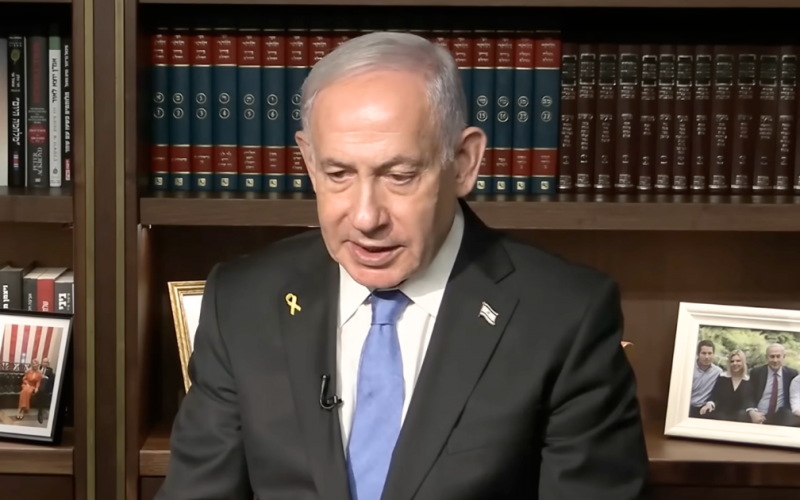
Israeli Prime Minister Benjamin Netanyahu disclosed that he was diagnosed with early-stage prostate cancer after a follow-up medical scan, but said the condition was treated successfully and he has now received a clean bill of health.
The announcement came through a medical report released by his office on Friday and later confirmed in a public statement on X.
According to the report, Netanyahu first underwent surgery on December 29, 2024, for benign prostatic hyperplasia, a non-cancerous enlargement of the prostate.
The procedure was performed at Hadassah Medical Centre and was described as successful with no complications.
Following that surgery, Netanyahu remained under routine medical monitoring.
During a later MRI scan, doctors identified what was described as a very small suspicious lesion measuring less than one millimeter in the prostate.
Additional testing confirmed early-stage prostate cancer with no evidence of spread or metastasis.
Netanyahu said the cancer was treated through targeted medical procedures and has now been fully resolved.
In his statement, he wrote: “Thank God, I am healthy,” and added that he is in “excellent physical condition.”
He also said he had “a minor medical issue with my prostate that was completely treated.”
Netanyahu explained that he requested the release of the April 20 medical report be delayed by two months.
He said the reason was to avoid publishing personal health news during the height of the war and to prevent what he called Iranian propaganda efforts against Israel.
He described the diagnosis as manageable and said doctors told him such conditions are common among men in his age group.
According to Netanyahu, physicians gave him two options: monitor the lesion closely or undergo treatment to eliminate the issue, per the Daily Mail.
He said he chose immediate treatment.
“You already know me. When I’m given information in time about a potential danger, I want to address it immediately,” Netanyahu wrote.
He added that the treatment required only a few short sessions, during which he continued reading and working.
Netanyahu said the lesion disappeared completely after treatment and thanked doctors and staff at Hadassah Hospital in Jerusalem.
The disclosure comes at an important political moment.
Netanyahu is expected to visit the White House in the coming weeks as the U.S. continues efforts to secure a long-term agreement related to the war with Iran.
Israel is also managing regional security negotiations involving Lebanon after fighting with the Iran-backed group Hezbollah.
Health disclosures involving national leaders often draw major public attention because they can affect confidence, continuity, and diplomacy.
In this case, Netanyahu’s office emphasized that the cancer was caught early, did not spread, and has been fully treated.
At 76, Netanyahu remains one of the oldest serving leaders in the region and continues to play a central role in wartime decision-making.
The key takeaway from the announcement is that Israel’s prime minister says the condition has been resolved and he remains fit for office.
