

Florida’s latest public safety and education law is drawing national attention after state leaders defended it as an effort to expand oversight of foreign-linked organizations and restrict the use of taxpayer funding in public institutions.
The measure, signed by Gov. Ron DeSantis (R), expands state authority to review and designate certain organizations under a terrorism classification framework.
Once designated, those groups can be barred from receiving state funds through public schools, universities, and other government programs.
Officials say the law is intended to ensure state systems operate under a uniform constitutional standard.
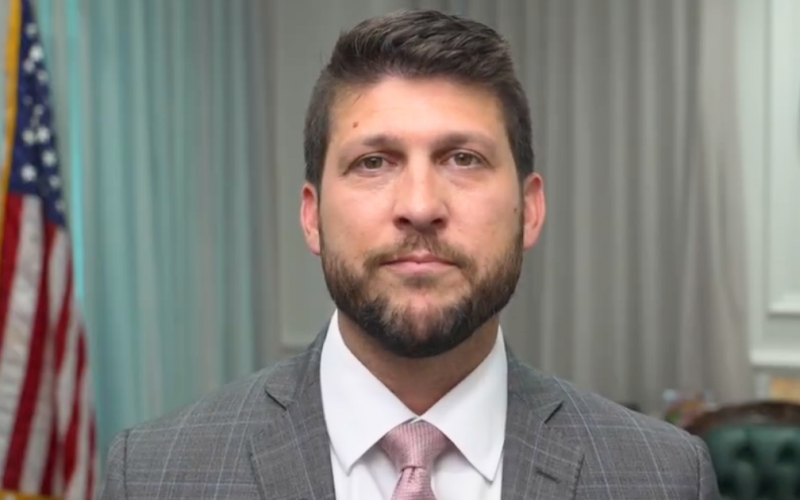
Florida Attorney General James Uthmeier has defended the legislation, saying that the law is intended to prevent outside influence from shaping state institutions, including education and public programs.
He specifically pointed to concerns about the influence of Sharia law, describing the measure as a “proactive” step to identify groups that could conflict with Florida law before they receive taxpayer funding.
“We do have a surge of Muslims in this country that are pushing Shariah law,” he said, “trying to influence our kids, and trying to educate the undermining of our Republican ideals… trying to attack Western civilization.”
Uthmeier said the intent is to prevent outside influence from shaping public institutions and education systems before it takes hold.
The law gives state officials authority to evaluate organizations receiving taxpayer support and determine whether they meet criteria that could disqualify them from continued participation in state-funded programs.
Supporters say the intent is to strengthen oversight rather than respond after violations occur.
A key component of the legislation involves financial restrictions.
Organizations designated under the framework may lose eligibility for state funding, including grants distributed through school districts, universities, and state agencies.
Officials say the provision is aimed at ensuring public funds are used in accordance with state policy.
The law also introduces additional requirements for higher education institutions.
Universities must report when students on visas are found to have ties to designated organizations, a provision state leaders say is intended to improve coordination with federal authorities and increase transparency in public universities.
DeSantis has framed the measure as part of a broader effort to reinforce state authority over public institutions.
In public remarks, he said Florida must maintain a consistent legal structure across its courts, schools, and agencies and prevent outside influence from shaping policy decisions.
State officials supporting the law say it is designed to strengthen accountability in how public money is distributed.
They argue that as Florida expands school choice programs and increases the number of private and nonprofit education providers receiving state funds, stronger oversight is necessary to ensure compliance with state standards.
Uthmeier echoed that position, saying state leaders intend to closely review organizations receiving public funding.
He said the goal is to ensure taxpayer dollars are not directed toward groups that conflict with Florida law or policy priorities.
Critics, however, say the law could raise constitutional concerns depending on how it is enforced.
Legal analysts cited by the Orlando Sentinel have pointed to potential First Amendment and religious liberty challenges, particularly regarding how organizations are designated and how funding restrictions are applied.
Some policy observers note that the law grants significant discretion to state officials, which could lead to disputes over classification decisions and eligibility for public funding.
Others describe the measure as part of a broader national trend in which states are increasing oversight of education funding and foreign-affiliated organizations.
Supporters counter that the framework is necessary to protect public institutions from external influence and to maintain consistency in how state law is applied across agencies.
They say enforcement will focus on financial integrity and compliance with established legal standards.
State officials say implementation will be carried out through existing regulatory agencies, with additional guidance expected as the law is applied in schools and universities.
They also say further administrative rules may be developed to clarify designation procedures.
The debate over the measure is expected to continue as agencies begin enforcement, with both supporters and critics anticipating possible legal challenges depending on how the law is applied in practice.
WATCH:
