

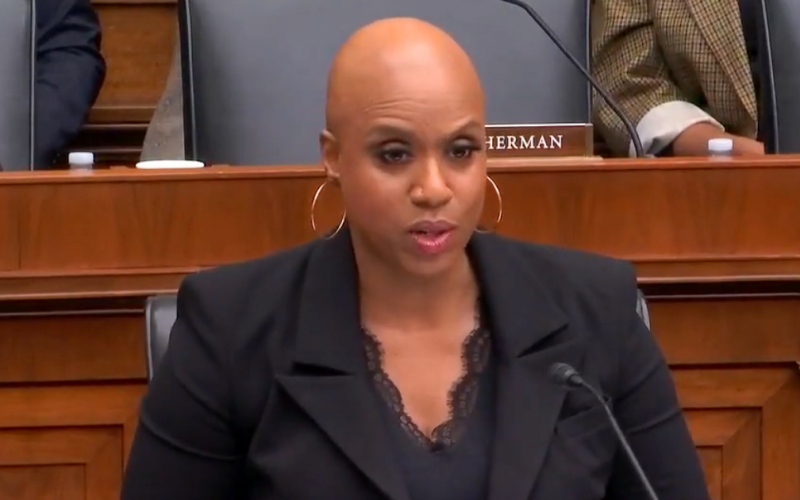
Rep. Ayanna Pressley (D) has unveiled the Housing Emergencies Lifeline Program, or HELP Act, claiming it will protect renters from eviction.
Pressley controversially calls eviction an “act of violence” and declares housing a “human right,” framing the bill as a solution to social instability.
Critics warn, however, that the legislation could undermine property rights, weaken personal responsibility, and saddle landlords with government-imposed burdens.
The HELP Act goes far beyond simply informing tenants of their rights.
It would bar landlords from reporting evictions to credit bureaus and allocate taxpayer funds to provide legal counsel for tenants facing eviction.
The bill also calls for a national database tracking eviction activity and a federal hotline connecting renters with government-backed assistance.
While presented as relief, these measures effectively federalize a matter that has historically been a private contractual issue, according to LifeZette.
At its core, the legislation threatens the foundations of property ownership and economic responsibility.
Honoring agreements is what allows Americans to invest, build wealth, and secure their futures, the Patriot Journal highlighted.
Shielding tenants from the consequences of missed payments creates a moral hazard: some renters may treat leases as optional, knowing the federal government will intervene.
Meanwhile, small landlords—often retirees or family-owned businesses—would face legal and financial pressures imposed by the same government that claims to protect tenants.
Labeling eviction as “violence” is not only misleading—it is dangerous, critics argue, stating that eviction is a legal mechanism to enforce contracts, not an act of physical harm.
Redefining contractual enforcement as violence flips the moral calculus, punishing responsible property owners while excusing those who break agreements.
They also argue that it opens the door to unchecked federal interference in private agreements, creating a troubling precedent for government overreach.
The long-term implications for the housing market could be severe.
Small landlords may sell properties to large corporate investors who can absorb financial risk, reducing competition and driving up rents.
Responsible tenants may face higher costs as landlords adjust rates to offset nonpayment.
Rather than balancing tenant support with economic reality, the HELP Act threatens to destabilize rental markets and erode incentives for personal responsibility.
History demonstrates that enforceable agreements—not federal mandates—are key to housing stability.
Pressley’s HELP Act would federalize routine landlord-tenant disputes, potentially increasing costs for taxpayers and complicating local housing markets.
Provisions such as taxpayer-funded legal aid for tenants could reduce the consequences of nonpayment, raising concerns about dependency and weakening incentives for financial responsibility, according to The Post Millennial.
Critics also warn that small landlords might sell properties to larger corporate entities, concentrating ownership and potentially limiting affordable housing options.
Communities that rely on locally owned rental properties could face both financial and social challenges.
In sum, the HELP Act represents a significant shift in housing policy.
By increasing federal oversight, altering consequences for nonpayment, and redefining legal norms for eviction, the legislation could affect property rights, market stability, and middle-class security.
Upholding property ownership and contractual responsibility remains central to sustaining economic prosperity and fairness
WATCH:
