

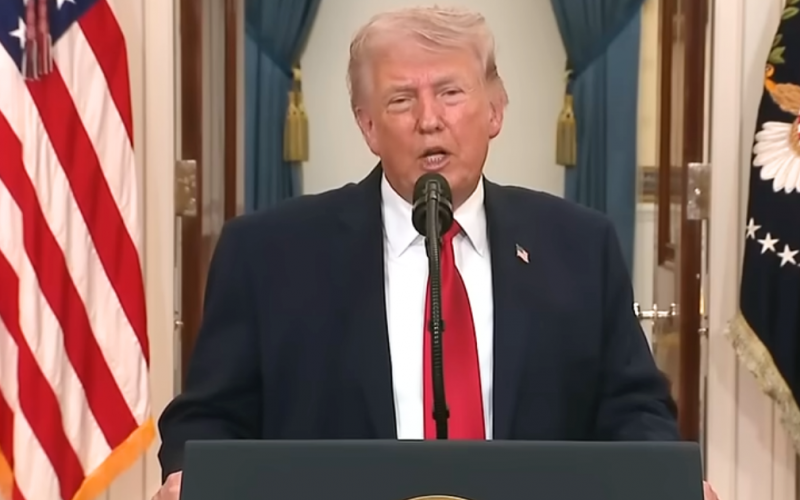
The Trump administration unveiled a major initiative Wednesday aimed at addressing microplastics and pharmaceutical contamination in U.S. drinking water, introducing stricter standards and expanded research efforts.
The Environmental Protection Agency (EPA) and Health and Human Services (HHS) released the Sixth Contaminant Candidate List, identifying chemicals and materials that could require federal regulation under the Safe Drinking Water Act.
At the center of the effort is the Systematic Targeting Of MicroPlastics (STOMP) program, administered by the Advanced Research Projects Agency for Health.
The initiative will receive $144 million to study the accumulation of microplastics in the human body and explore methods for safe removal.
“For too long, Americans have raised concerns about plastics and pharmaceuticals in their drinking water. That ends today,” EPA Administrator Lee Zeldin said. “By listing these substances for the first time, we commit to science-driven solutions and to protecting every American family.”
Microplastics, minute fragments from degraded plastics, have been discovered throughout the human body, including in the lungs, brain, and digestive organs.
According to a 2019 study, estimates suggest Americans ingest between 39,000 and 52,000 particles annually, increasing to more than 100,000 when inhalation is included.
HHS Secretary Robert F. Kennedy Jr. stressed the need for clarity on health impacts.
“We do not yet understand how microplastics interact with the immune system, endocrine system, or neurological processes, nor do we have validated methods for removal,” he said.
The STOMP initiative is structured in two phases.
The first examines microplastic buildup in humans, while the second focuses on developing safe removal strategies. Research from the University of New Mexico, analyzing 62 placentas, revealed microplastics in all samples, indicating exposure begins before birth, according to The New York Times.
Pharmaceutical contaminants such as ibuprofen and acetaminophen are also under review.
These substances enter waterways from household disposal, and many treatment plants are not equipped to filter them out effectively.
Critics note potential risks to hormonal and reproductive systems, though scientific evidence remains preliminary.
The STOMP program operates within the broader Make America Healthy Again (MAHA) framework, designed to combat rising chronic disease rates nationwide.
The 2025 MAHA report highlighted troubling microplastic levels in children and pregnant women, urging federal action.
Environmental advocates offered mixed reactions. Some hailed the program as a long-needed step toward cleaner water, while others viewed it as largely symbolic.
Suzanne Novak of Earthjustice described the announcement as a “PR stunt” lacking enforceable standards or immediate community protections, NBC Chicago reported.
Betsy Southerland, former EPA Office of Water director, characterized it as “early-stage research” that will require years to produce actionable outcomes.
Experts, however, stressed the importance of gathering data.
Rebecca Fry of UNC Chapel Hill called the initiative “cautiously optimistic,” noting that monitoring microplastics is essential to understanding exposure levels.
Julian Fairey of the University of Arkansas said that adding microplastics to the Contaminant Candidate List could open funding opportunities for future research.
Microplastics originate from environmental degradation of larger plastics and manufactured products such as toothpaste and exfoliating scrubs.
Human exposure occurs daily through ingestion and inhalation, but current research has yet to conclusively link microplastics to diseases such as cancer, fertility disorders, or cardiovascular conditions.
The administration has also initiated a 60-day public comment period, inviting citizens to provide input that will influence potential regulations.
Officials stressed that public feedback would guide decisions on managing these emerging drinking water contaminants.
