

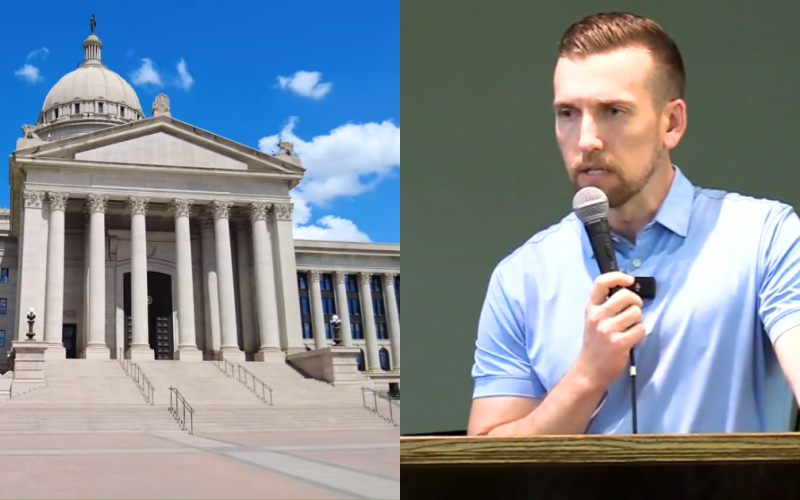
The Oklahoma House of Representatives last week approved a bill legalizing “human composting” as an alternative to burial or cremation, sparking debate over ethics, safety, and the treatment of human remains.
The legislation, HB 3660, now moves to the state Senate, where its fate remains uncertain amid conservative scrutiny and growing public concern.
Natural organic reduction (NOR), the method authorized under the bill, involves placing human remains in vessels with organic materials like wood chips or straw and allowing microbes to gradually convert the body into nutrient-rich soil over several weeks.
Republican state Rep. Jim Shaw, a vocal opponent, condemned the bill as a violation of human dignity.
“Our dead deserve better than to be turned into human compost and scattered in our gardens,” Shaw told LifeSite News. “It’s time to restore reverence in burial practices and stop commodifying the human body.”
Representing a rural district, Shaw has long campaigned against using biosolids—treated human and industrial waste—as fertilizer on farmland, a practice he says this bill escalates.
Advocates for NOR frame the process as environmentally friendly and less resource-intensive than traditional cremation or burial.
Critics, including Shaw, counter that practical and ethical concerns remain, noting that residual chemicals from medications or medical treatments could persist in composted soil.
The process, while promoted as sustainable, also touches deeper cultural and moral questions about how society honors the dead.
The House passed HB 3660 with bipartisan support. A majority of Democrats and 43 Republicans voted in favor, while 36 Republicans and one Democrat opposed it, The Daily Caller reported.
Republican House Speaker Kyle Hilbert and bill sponsors Reps. Eddy Dempsey and Sen. Casey Murdock, all representing farming districts, supported the legislation.
Shaw publicly confronted Dempsey on the House floor, asking whether human remains—or even standard biosolids—should be considered acceptable as fertilizer.
Currently, NOR is legal in 14 states, including California, New York, Colorado, and Washington, all of which lean blue or are swing states, according to American Faith.
If Oklahoma enacts HB 3660, it would become the first solidly red state to allow human composting.
expressed hope that a more conservative Senate, combined with public reaction on social media, could prevent the bill from advancing.
“The outpouring of concern, not just from Christians but from those guided by common sense, has been remarkable,” he said.
Religious leaders have also voiced opposition.
In 2023, the U.S. Conference of Catholic Bishops condemned human composting, stating it undermines the inherent dignity of human life and disrupts proper treatment of deceased bodies.
The bishops emphasized that burial—or cremation when used respectfully—reflects reverence for the body and preserves moral and spiritual respect for human life.
Shaw stressed that NOR is more than an environmental question.
“This isn’t just about compost or soil—it’s about how we honor our dead and the values we pass on,” he said.
He warned that the legislation continues a trend of commodifying human remains, echoing concerns he has voiced about the longstanding use of biosolids as fertilizer in Oklahoma.
As HB 3660 moves to the Senate, Oklahoma faces a choice between aligning with progressive states in adopting NOR or maintaining traditional practices that reflect conservative values and cultural norms.
Public debate has grown online, and Shaw anticipates that ethical, environmental, and health considerations will remain central as lawmakers weigh the legislation’s future.
The coming weeks will determine whether Oklahoma becomes the first red state to adopt human composting or whether the measure stalls under conservative scrutiny and public pressure.
WATCH:
