

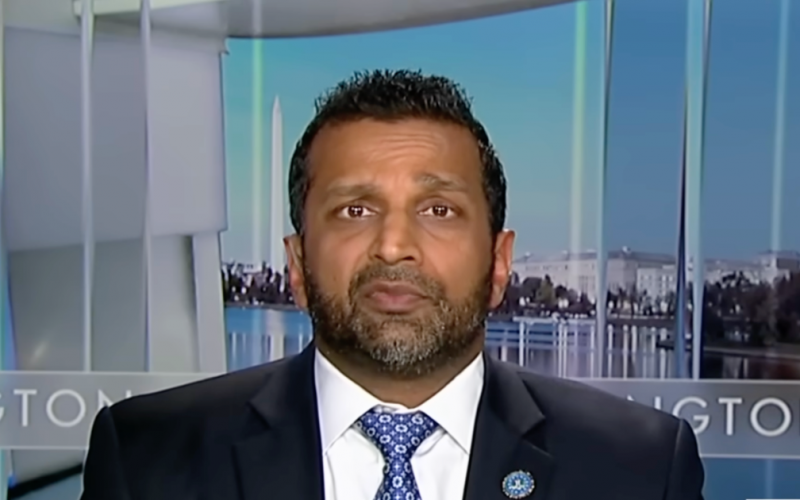
Iran-linked hackers have breached the personal email of FBI Director Kash Patel, exposing private photos and documents in a major cybersecurity incident tied to escalating tensions with Tehran.
The hacking group, known as Handala Hack Team, claimed responsibility for the breach and published materials online, including personal images and email content linked to Patel. The group taunted the FBI chief directly, saying he had joined their list of “successfully hacked victims.”
According to a Justice Department official, the breach is real. The official confirmed that Patel’s email account had been compromised and said the materials released online appear to be authentic, though a full forensic review is still ongoing.
The leaked content includes a mix of personal and professional communications dating from 2010 to 2019. Hackers also posted photos showing Patel in private settings, including images of him smoking cigars, riding in a convertible, and posing with a bottle of alcohol.
While Reuters could not independently verify every email, the account tied to the breach matches a known Gmail address previously linked to Patel in earlier data exposures. That detail adds credibility to the hackers’ claims and raises further concerns about the security of personal accounts used by high-ranking officials.
Handala is widely believed by Western intelligence analysts to be connected to Iranian cyber units. The group has a history of targeting U.S. institutions and corporations, often framing its actions as retaliation tied to Middle East conflicts and pro-Palestinian messaging.
This is not their first high-profile operation. Earlier this month, the same group claimed responsibility for hacking a U.S.-based medical company, saying it had deleted a large amount of internal data. That attack, combined with the Patel breach, signals a broader campaign aimed at American targets.
The method used in the Patel hack appears consistent with previous operations. Cybersecurity experts say these groups often rely on phishing attacks or credential harvesting, tricking targets into giving up login information or verification codes.
Once access is gained, attackers can extract emails, contacts, and private files while also using the account to launch further attacks, per Reuters.
The breach raises serious questions about how senior officials handle sensitive communications. While government systems are heavily secured, personal email accounts are often less protected, making them a weak point that foreign adversaries can exploit.
It also comes at a time of heightened geopolitical tension. With the United States engaged in a military conflict involving Iran, cyberattacks are increasingly being used as a tool of retaliation and psychological pressure.
So far, the FBI has not issued a formal public response, and Google, which operates Gmail, has not commented on the breach. The lack of immediate answers is likely to draw further scrutiny as investigators work to determine how the intrusion happened and whether additional data was compromised.
What makes this situation especially concerning is the pattern. High-level officials are being targeted directly, not just government systems. That shift suggests a more aggressive strategy aimed at personal vulnerabilities rather than institutional defenses.
The key issue now is containment. Investigators will be focused on determining whether the breach extends beyond Patel’s account and whether any sensitive or classified information was exposed.
One thing is clear: this was not a random hack. It was targeted, calculated, and tied to a broader geopolitical conflict that is now spilling into cyberspace.
