

The Department of Justice (DOJ) this week revoked the U.S. citizenship of two naturalized Americans accused of serious criminal activity, part of an intensified effort under the Trump administration to hold individuals accountable who allegedly concealed crimes during the naturalization process.
A third case, involving alleged marriage fraud, has also been filed.
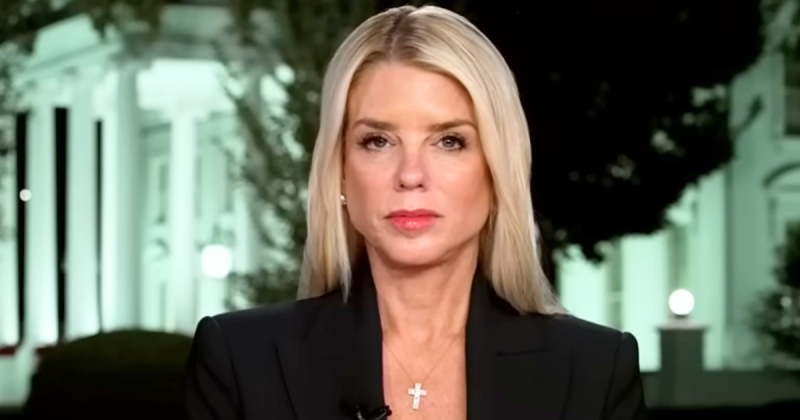
Attorney General Pam Bondi stressed the significance of the actions.
“American citizenship is a sacred privilege — not a cheap status that can be obtained dishonestly,” she wrote on X. “Today’s denaturalization actions reflect this Department of Justice’s ongoing efforts to strip citizenship from people who conceal crimes or defraud the American people during the immigration process.”
The first individual, Vladimir Volgaev, a Ukrainian national, became a U.S. citizen in 2016.
According to Newsmax, prosecutors allege that from 2011 onward, Volgaev engaged in smuggling firearm components abroad while also committing federal housing benefits fraud.
Officials contend he failed to disclose these activities during naturalization, preventing him from demonstrating the “good moral character” required by law.
The second case involves Mirelys Cabrera Diaz, a Cuban national naturalized in 2017.
Following her 2019 conviction for participating in a $6 million Medicare fraud scheme, her citizenship was revoked.
Authorities say she conspired to submit fraudulent prescription claims, paid kickbacks to recruiters, and maintained records of illicit payments.
Cabrera Diaz served 29 months in prison and was ordered to pay restitution.
The DOJ also brought a civil case against Alec Nasreddine Kassir, a Lebanese national, claiming he gained citizenship by falsely representing his marital status.
Officials assert that Kassir provided misleading information about living with a U.S. citizen spouse and later acknowledged committing passport fraud during his naturalization process.
These actions come amid a sharp increase in denaturalization efforts under President Trump.
From 1990 through 2017, the DOJ pursued 305 denaturalization cases, averaging about 11 each year.
During President Trump’s first term, filings surged to 168, roughly 42 annually. Under former President Biden, the pace slowed, with just 64 cases over four years—around 16 per year.
According to a DOJ source who spoke with NewsNation, the department has initiated at least 64 new cases targeting individuals accused of obtaining citizenship through fraud since Trump began his second term last year.
Naturalized citizens whose status is revoked revert to their previous immigration status, which can lead to deportation — a policy strongly emphasized by the Trump administration.
Legal experts caution that revocation carries a high burden of proof.
Sharvari Dalal-Dheni, senior director of government relations for the American Immigration Lawyers Association, told NewsNation, “It’s difficult to believe that the DOJ is going to denaturalize thousands, given the burden of proof. But even initiating cases may achieve the administration’s goal of deterrence.”
The renewed effort underscores the administration’s commitment to safeguarding the integrity of U.S. citizenship.
Observers note that denaturalization is not undertaken lightly; federal prosecutors must provide clear, convincing evidence in federal court to justify revoking citizenship.
Criminal cases must meet the highest legal standards, while civil denaturalization cases can be pursued at any time.
These high-profile actions signal a hardline approach to immigration enforcement, emphasizing that citizenship is a privilege contingent on honesty and compliance with the law.
Analysts suggest the cases may reshape perceptions of naturalization and serve as a deterrent for individuals considering fraudulent pathways to citizenship.
As the DOJ continues its push, legal observers say the focus will remain on individuals who commit serious crimes or misrepresent their eligibility while ensuring the legal safeguards surrounding naturalization are maintained.
