

President Donald Trump announced Tuesday that Iran has committed to abandoning its nuclear weapons program, as active diplomatic negotiations involving some of the administration’s most senior officials continue to unfold behind the scenes.
Speaking from the Oval Office, Trump confirmed that Vice President JD Vance and Secretary of State Marco Rubio are both actively engaged in back-channel peace talks with Tehran, now in its fourth week of conflict with the United States.
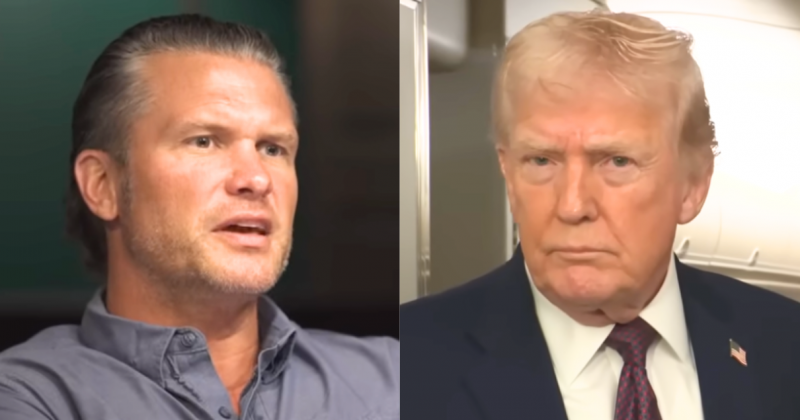
The President also revealed that Defense Secretary Pete Hegseth had privately opposed a diplomatic resolution. “Pete didn’t want it to be settled,” Trump said of his Secretary of War.
On Monday, Trump announced a five-day pause on U.S. strikes targeting Iranian energy infrastructure. The temporary halt was designed to create space for indirect negotiations with Tehran through third-party intermediaries.
Despite the diplomatic opening, the Pentagon is simultaneously preparing contingency plans.
The Wall Street Journal reported that the military is readying a deployment of approximately 3,000 soldiers from the Army’s 82nd Airborne Division to the region, adding to the Marines already stationed in the Middle East.
The backdrop for Tuesday’s Iran remarks was a White House swearing-in ceremony. Trump administered the oath of office to former Senator Markwayne Mullin, who assumed leadership of the Department of Homeland Security following the removal of Kristi Noem.
Reporters in the Oval Office pressed the President on what prompted him to seek a ceasefire after weeks of continued bombing campaigns against Iran. “They’re talking to us, and they’re talking sense,” Trump replied.
The President stated that the primary objective driving the military campaign was preventing Iran from ever obtaining a nuclear weapon. “I don’t want to say in advance, but they’ve agreed they will never have a nuclear weapon,” Trump said.
When asked whether envoys Steve Witkoff and Jared Kushner were being dispatched to conduct direct negotiations, Trump confirmed talks were already underway.
“We’re in negotiations right now. They’re doing it along with Marco, JD. We have a number of people doing it. And the other side, I can tell you, they’d like to make a deal,” the president stated.
Both Vance and Rubio are widely considered front-runners for the Republican presidential nomination in 2028.
Trump declined to specify which Iranian officials the United States is currently speaking with, noting that multiple rounds of Israeli and American joint strikes have killed successive layers of the Islamic Republic’s leadership.
“We killed all their leadership and then they met to choose new leaders and we killed all of them. And now we have a new group and we can easily do that but let’s see how they turn out,” Trump said.
The president disclosed that Iranian leadership sent the United States a significant gesture, which he described as a “present” delivered the prior day.
“They gave us a present and the present arrived today and it was a very big present, worth a tremendous amount of money,” Trump said, adding, “I’m not going to tell you what that present is, but it was a very significant prize and they gave it to us.”
Trump stated that the gesture confirmed for him the credibility of the current Iranian negotiating partners. “We’re dealing with the right people,” he said.
When a reporter speculated the gift was nuclear-related, Trump rejected the suggestion.
“It was oil and gas related and it was a very nice thing they did,” Trump said.
A follow-up question linked the gesture to the Strait of Hormuz — the critical international shipping corridor that Iran had been targeting.
“Yeah, it was related to the flow and to the Strait, yeah,” Trump confirmed.
Trump had previously publicly criticized NATO allies for failing to volunteer forces to help patrol the Strait amid the Iranian attacks on shipping lanes.
Hegseth was present at the swearing-in ceremony and delivered a brief military update at Trump’s request.
Trump acknowledged sensitivities around the terminology applied to the conflict. “People don’t like me using the word war,” Trump said. “So I won’t, but the Democrats call it a war.”
