

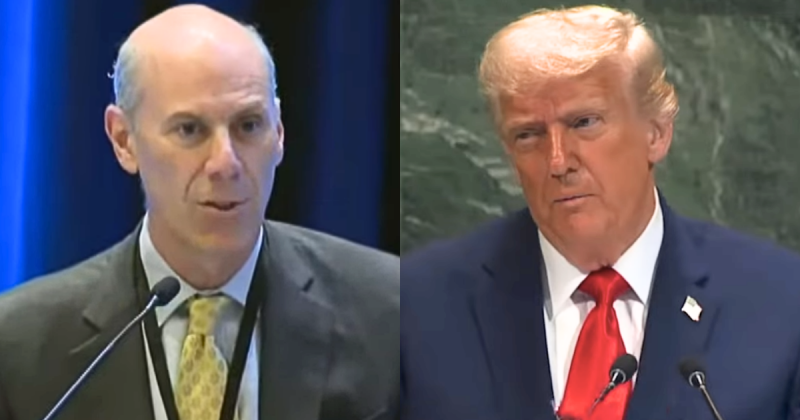
In a controversial ruling this month, Chief U.S. District Judge James Boasberg ordered that the judiciary must be notified whenever a federal grand jury refuses to approve an indictment.
The March 4 order follows the Trump administration’s unsuccessful attempt to bring charges against six Democratic lawmakers over a video urging service members not to follow allegedly unlawful orders—a case that has drawn sharp criticism from conservative lawmakers and commentators.
Boasberg’s directive, which will remain in effect for 120 days, requires the grand jury foreperson to “promptly and in writing report the lack of concurrence to the duty magistrate judge under seal,” with those notifications maintained in confidential court files.
The judge said the measure is intended to promote “consistency and transparency” in grand jury proceedings, regardless of whether a defendant has already been charged.
The order comes after the Trump administration’s effort to indict six lawmakers—Reps. Jason Crow (D-CO), Maggie Goodlander (D-NH), Chris Deluzio (D-PA), Chrissy Houlahan (D-PA), and Sens. Mark Kelly (D-AZ) and Elissa Slotkin (D-MI).
Federal prosecutors, led by U.S. Attorney Jeanine Pirro’s office, presented the case to a grand jury last month.
However, the panel declined to return indictments, with reports indicating prosecutors failed to meet the relatively low probable cause threshold required for charges, according to NBC News.
The outcome left the case stalled and highlighted divisions over how such political speech should be handled under federal law.
Pirro defended her office’s aggressive posture during a news conference, stating she was “willing to take a not guilty” and “willing to take a no true bill, because I’ll take all the crimes and put ‘em in,” Fox News reported.
She framed the approach as part of a broader push to pursue cases that, in her view, had been ignored by prior leadership at the Justice Department.
Conservative lawmakers quickly pushed back on Boasberg’s order, arguing it represents judicial overreach into prosecutorial functions.
Rep. Brandon Gill (R-TX) introduced articles of impeachment against the judge for what he described as “abuse of power,” while Rep. Chip Roy (R-TX) previously sought to defund Boasberg’s office, citing concerns over what he called the weaponization of the judiciary against Republicans.
The controversy has also been fueled by Boasberg’s recent rulings in other high-profile disputes.
He blocked subpoenas issued by Pirro targeting Federal Reserve Chairman Jerome Powell, suggesting they were intended to pressure him politically.
That decision further intensified criticism from conservatives who argue the judge is interfering in executive branch authority and shielding political opponents.
Legal experts note that grand juries are a foundational element of the U.S. justice system, protected under the Fifth Amendment, which requires an indictment before serious criminal charges can proceed.
Supporters of Boasberg’s order argue that notifying judges of failed indictments adds oversight, while critics contend it risks inserting the judiciary into prosecutorial decision-making in unprecedented ways.
As the 120-day order remains in place, the dispute is expected to continue fueling debate over the balance of power between courts and prosecutors.
The failed indictments and Boasberg’s new requirement have become a flashpoint in broader discussions about judicial authority, political prosecutions, and transparency within the federal justice system.
WATCH:
