

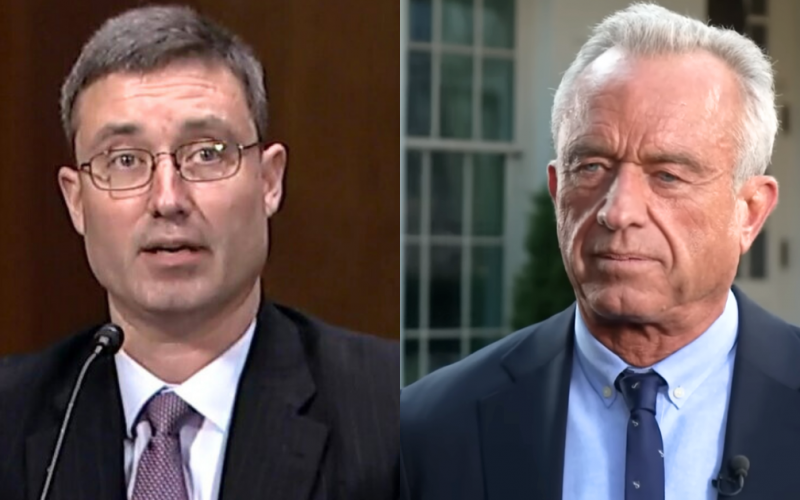
A federal judge in Boston has temporarily blocked sweeping changes to the U.S. childhood vaccine schedule implemented by Health and Human Services (HHS) Secretary Robert F. Kennedy Jr., highlighting concerns over federal overreach, the circumvention of established procedures, and the need to protect parental authority in children’s healthcare decisions.
The ruling suspends Kennedy’s plan to reduce recommended vaccinations for children while highlighting potential violations in the process used to restructure the panel that guides national immunization policy.
Judge Brian E. Murphy, appointed by former President Joe Biden, issued an order halting Kennedy’s directives affecting vaccines for influenza, rotavirus, hepatitis A and B, certain forms of meningitis, and respiratory syncytial virus (RSV).
Leading medical organizations, including the American Academy of Pediatrics, had warned that cutting doses could leave children vulnerable to preventable illnesses.
They emphasized that any changes to the vaccine schedule must be guided by rigorous scientific evidence to ensure ongoing public safety.
At the center of the legal dispute is Kennedy’s overhaul of the Advisory Committee on Immunization Practices (ACIP).
The secretary removed all 17 existing members and appointed a new panel, some of whom have previously expressed anti-vaccine viewpoints.
The court concluded that Kennedy’s reconstitution of the ACIP likely violated federal procedural requirements, resulting in a pause of all decisions made by the new committee until further review, WCVB reported.
The lawsuit, originally filed in July and later amended, was brought by a coalition of medical associations and healthcare professionals.
Plaintiffs argued that Kennedy’s actions bypassed established scientific guidelines and procedural safeguards, putting children at risk and undermining trust in national immunization policy.
Dr. Shira Doron, Chief Infection Control Officer at Tufts Medicine, praised the ruling, highlighting the importance of evidence-based decisions in public health.
“We have already figured out as states, and as medical societies, how to work around the fact that the guidance out of the CDC can’t be trusted anymore,” she said. “We have state-based recommendations, we have society- based recommendations.”
The decision drew criticism from some federal officials.
Deputy Attorney General Todd Blanche described the ruling as “activist” on X and noted it followed shortly after an unrelated appeals court decision had overturned a previous judicial order, Just the News highlighted.
HHS spokesperson Andrew Nixon said that the department “looks forward to this judge’s decision being overturned, just like his other attempts to keep the Trump administration from governing,” CNBC reported.
In practical terms, the court order freezes all proposed reductions to the vaccine schedule and suspends any planned meetings of the reconstituted ACIP panel, including discussions concerning COVID-19 vaccines.
Legal analysts argue the ruling highlights the need to check federal overreach, ensuring that public health policy changes do not bypass established laws or sideline parental authority.
Critics say the episode underscores the risks of allowing unelected bureaucrats to impose sweeping vaccine mandates without proper accountability.
With appeals expected, the case could set an important precedent for reinforcing limits on federal power and ensuring that procedural safeguards are strictly enforced before altering long-standing vaccine recommendations.
Observers warn that the case could redefine the limits of federal power in public health.
Legal experts and advocacy groups are closely monitoring developments, emphasizing that the ruling may reinforce accountability and prevent federal agencies from unilaterally altering critical health policies.
WATCH:
