

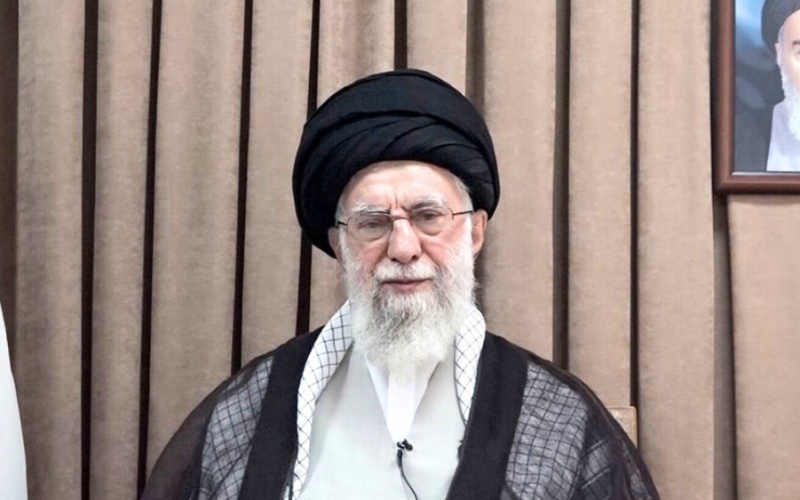
Iran’s Assembly of Experts moved Tuesday to fill the power vacuum left by the assassination of Supreme Leader Ayatollah Ali Khamenei, selecting Mojtaba Khamenei, the son of the slain supreme leader, as the next leader of the Islamic Republic.
The vote was held under pressure from the Islamic Revolutionary Guard Corps, according to Iran International’s correspondent.
Khamenei was assassinated on February 28, 2026, during a series of airstrikes conducted by Israel and the United States.
His death was confirmed by the Iranian Supreme National Security Council and by state media the following day.
Senior Israeli officials assessed that the Assembly is expected to formally announce Mojtaba Khamenei as successor in the coming hours.
Iranian state media had not confirmed the reported decision as of Tuesday.
The Islamic Revolutionary Guard Corps had been insisting on the swift appointment of the next leader of the Islamic Republic following Ali Khamenei’s death, according to sources with knowledge of the matter. Iran International
Per those sources, the remaining IRGC command structure sought to finalize the decision within a matter of hours. With airstrikes ongoing, convening a formal session of the Assembly of Experts was described as not feasible, leading the IRGC to push for the appointment to take place outside the legally prescribed procedures. Iran International
The International Business Times reported that before Mojtaba was named, Iran had formed a transitional council to assume all leadership duties, comprising President Masoud Pezeshkian, the head of Iran’s judiciary, and a member of the Guardian Council selected by Iran’s Expediency Council.
Mojtaba Khamenei, the supreme leader’s second son, is considered aligned with Iran’s hardline conservative camp, similar to his father. He has publicly supported suppressing regime opponents inside Iran and backing an assertive policy toward external enemies.
A mid-ranking cleric who teaches Shiite theology at a seminary in Qom, Iran’s religious center, Mojtaba has never held a formal government position but is widely believed to wield considerable influence behind the scenes.
He is known to have cultivated close ties with the Revolutionary Guard, per reports.
In 2019, the United States imposed sanctions on Mojtaba Khamenei, saying that although he did not hold an official title, he effectively “represented” the supreme leader.
It was ultimately his deep institutional ties to the IRGC that proved decisive in securing the necessary votes within the Assembly.
Analysts had previously warned that a father-to-son transfer of leadership could spark anger among Iranians critical of clerical rule, as well as among some supporters of the system who view such a succession as un-Islamic.
Simultaneously on Tuesday, IDF Chief Spokesman Brig.-Gen. Effie Defrin revealed in a press conference that the IDF destroyed a secret Iranian nuclear weapons development site in Tehran, reported The Jerusalem Post.
Defrin named the site as Min Zadai, located on the northeast outskirts of Tehran, and said the site was linked to weapons development. According to the outlet, he said IDF intelligence followed nuclear scientists who tried to travel there clandestinely.
The IDF said that despite a 12-day conflict between Israel and Iran in June 2025 during which several Iranian nuclear sites were struck, Iran did not halt its military nuclear activities.
Instead, it allegedly continued developing nuclear weapons-related capabilities while relocating infrastructure to hardened underground facilities designed to withstand aerial attacks.
