

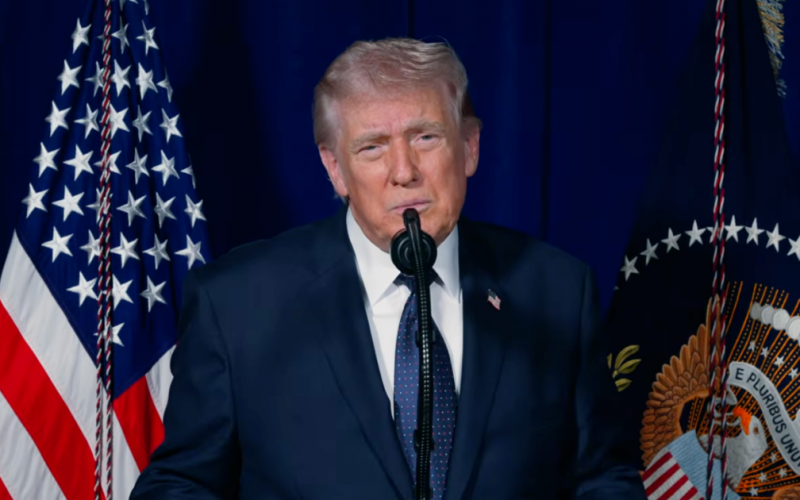
America’s top counterterror officials are bracing for potential retaliation on U.S. soil as the war with Iran intensifies, with former security leaders warning that sleeper cells or self-radicalized attackers could already be inside the country.
As President Donald Trump oversees ongoing strikes against Iranian targets — including the operation that reportedly killed Supreme Leader Ayatollah Ali Khamenei — federal law enforcement agencies have shifted into heightened vigilance mode.
The Federal Bureau of Investigation (FBI) and the Department of Homeland Security (DHS) have mobilized counterterrorism teams nationwide. Joint Terrorism Task Forces are operating around the clock in major cities, including Washington, D.C., New York, and Los Angeles.
Charles Marino, a former DHS senior adviser and Secret Service supervisor, warned of what he described as a “convergence” of threats — ranging from organized sleeper cells to lone actors inspired by Iranian state media messaging.
“Is it possible you have 10, 15, 20 people in the country that are part of a cell that then go out and carry out simultaneous attacks? Yes,” Marino said in an interview.
He cautioned that potential targets would likely be “soft” venues: crowded concerts, sports events, public gatherings and transportation hubs. Among the highest-profile concerns is the upcoming World Cup, designated a National Special Security Event, with stadiums such as MetLife Stadium in New Jersey expected to draw massive crowds.
Marino referenced the 2008 Mumbai attacks, in which coordinated teams struck multiple locations over several days, warning that a similar multi-site strategy could be appealing to extremist operatives seeking maximum impact.
Despite the heightened alert posture, officials stress there is currently no publicly confirmed, credible domestic terror plot.
Retired FBI Supervisory Special Agent Jason Pack emphasized that the most immediate risk may not be a coordinated foreign-directed operation, but a self-radicalized individual already living in the U.S.
“The most immediate domestic threat is the lone wolf,” Pack said, noting that many attackers in recent years had no prior criminal history or direct ties to foreign handlers.
One incident under scrutiny is a deadly shooting in Austin, Texas, where investigators are examining whether Middle East tensions may have influenced the suspect. Authorities have not publicly confirmed any direct connection to Iran, per the Daily Mail.
Experts say the challenge for law enforcement lies in the constitutional divide between protected speech and prosecutable action. Individuals may express extremist views without crossing legal thresholds — until violence occurs.
Beyond physical attacks, cybersecurity professionals warn that Iran-linked hackers have increased probing activity against American systems. James Knight, a digital security specialist, described the current cyber threat level as “low to medium,” with reconnaissance and denial-of-service attempts detected but no large-scale disruption so far.
Knight said U.S. and Israeli strikes may have degraded parts of Iran’s centralized cyber infrastructure, potentially limiting Tehran’s ability to launch coordinated digital attacks. However, he cautioned that independent operatives could attempt smaller-scale strikes on banks, pipelines, hospitals or power grids.
Meanwhile, geopolitical risk analysts warn of longer-term instability if Iran’s internal power structure fractures. Stefano Ritondale of the consultancy Artorias suggested that splinter factions of the Islamic Revolutionary Guard Corps could evolve into decentralized militant groups if central authority weakens.
He pointed to historical parallels in Iraq, where the collapse of state institutions contributed to the rise of extremist organizations.
President Trump has stated that the U.S. has the capability to sustain operations longer than the initial projected four-to-five-week timeline. Iranian and allied forces have responded with missile and drone attacks across Israel and the Gulf states, widening the regional conflict.
Security officials continue to urge vigilance without panic.
“The American people should be alert, not afraid,” Pack said.
