

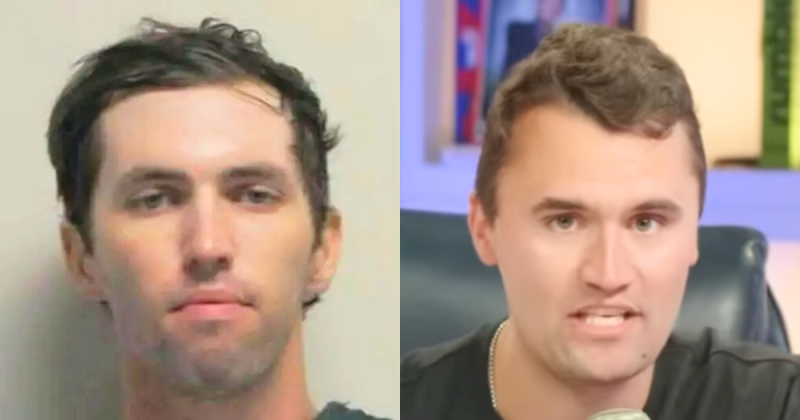
A Utah State Bureau of Investigation agent disclosed critical evidence during testimony Tuesday that could reshape the murder case against Tyler Robinson, the man accused of killing conservative activist Charlie Kirk at Utah Valley University last September.
Agent Dave Hall took the witness stand in Judge Tony Graf’s courtroom as defense attorneys mounted an aggressive challenge seeking to disqualify the entire Utah County prosecutor’s office from the high-profile case.
Hall described the layout where Kirk was shot, noting the amphitheater-style arrangement of the stage area before detailing the extensive evidence collection process that followed the shooting.
Following the killing, investigators launched a multi-pronged approach to gather information from attendees.
The Bureau posted public notices and made general requests for witnesses to provide statements about what they observed.
“There were several processes used,” Hall explained during questioning by prosecutors.
“There was a general request for information that was put out for people who attended the event.”
Witnesses also had opportunities to come forward when they returned to campus to retrieve personal items left behind during the evacuation.
Additional individuals volunteered information through various channels established by investigators.
The Bureau ultimately collected over 40 witness statements, supplementing those already obtained by the FBI.
Investigators also gathered numerous videos from the scene, accumulating approximately 300 terabytes of footage from Utah Valley University alone.
Despite the extensive witness pool, none of those interviewed could provide a clear identification of the shooter at the scene.
Hall testified the break in the case came from social media communications.
“Admissions that he had been involved in the incident as the shooter” were discovered in social media chats, Hall stated, referring to messages attributed to Robinson.
Physical evidence proved crucial to building the prosecution’s case.
Hall confirmed DNA evidence was recovered from items used during the crime and subsequently matched to Robinson through comparative analysis.
A screwdriver discovered on a building rooftop and a firearm found in a tree area on campus both yielded DNA evidence, according to Hall’s testimony.
The firearm’s DNA profile was consistent with Robinson’s genetic material.
A search warrant executed at Robinson’s residence uncovered additional incriminating materials.
Investigators seized bullet casings bearing inscriptions, tools believed used to create those markings, shooting targets and recently purchased targeting materials.
Ring doorbell camera footage from neighboring residences and various electronic devices including laptops were also collected during the search.
The inscribed shell casings from the apartment matched markings on casings recovered with the firearm, Hall noted.
Defense attorney Kathryn Nester pressed Hall during cross-examination about why investigators had not specifically interviewed the adult child of one prosecutor, despite the large crowd present.
Hall maintained the Bureau collected statements from witnesses who voluntarily came forward.
Nester raised questions about alternative theories circulating on social media and in press coverage suggesting potential involvement of additional shooters.
“Are you aware that the videos that have been taken from the scene have been analyzed by people on social media and in the press to see if there was somebody else that could have been involved in this?” she asked.
Hall responded, “I’m aware that everybody has a theory on the case.”
He confirmed the prosecutor’s adult child eventually provided video footage after coming forward later in the investigation.
Nester challenged Hall on DNA evidence complexity, asking whether he was aware the DNA seized from the scene “consisted of a mixture of at least five individuals.”
Hall acknowledged he is not a DNA expert but faced sharp criticism from Nester for selectively discussing DNA findings favorable to prosecutors while declining to elaborate on the mixture containing genetic material from five people.
Also on Tuesday, defense attorneys argued that Chad Grunander, identified in court documents as “Prosecutor A,” should be disqualified from the case because his daughter was present during the incident.
The defense contended this creates a conflict of interest that warrants removing the Utah County Attorney’s Office from the prosecution entirely.
Grunander, who has served as a prosecutor with the Utah County Attorney’s Office for nearly 22 years, took the witness stand Tuesday to address the allegations.
He testified that he was delivering a presentation to elected county attorneys at a state conference when he received urgent text messages from his daughter around 12:26 pm local time.
The prosecutor recalled receiving messages stating “someone was shot” in all capital letters, followed by another message indicating “something to the effect of I’m okay.”
He spoke briefly with his daughter by phone to confirm her safety, though he said they did not discuss many details about what had occurred.
After alerting Utah County Attorney Jeffrey Gray and other office colleagues about the situation, Grunander left the conference by approximately 12:50 pm and drove to Utah County.
Upon arrival, he and Gray attempted to understand the chaotic situation unfolding at the university campus.
When questioned about whether he characterized his daughter as a potential witness, Grunander stated he was confident he mentioned his daughter was present and had left a bag behind, but did not label her as a potential witness or indicate she was present during the actual incident.
As chief deputy in the office, Grunander acknowledged participating in discussions about appropriate charges for Robinson. However, he emphasized that Gray maintains ultimate approval authority over charges in any homicide case, particularly regarding the decision to pursue the death penalty.
Grunander addressed discussions about seeking capital punishment, explaining his role focused on whether facts supported an aggravating factor under Utah law that would justify a potential death penalty case.
He stated there were discussions but could not recall Gray specifically asking what he would do in the situation.
