

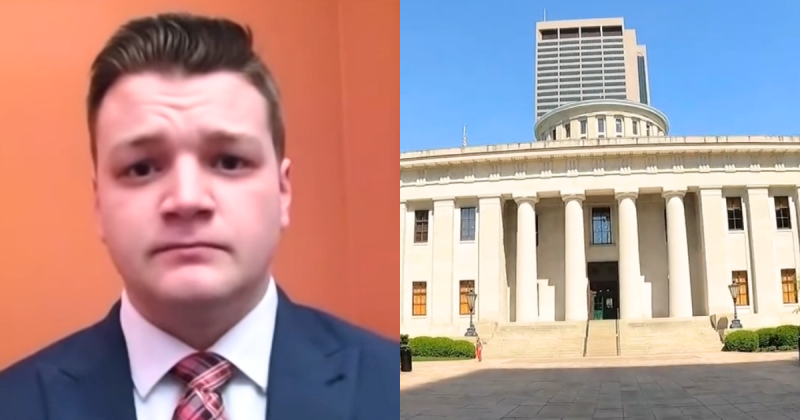
Federal and state authorities are scrutinizing the UNIK Foundation, a Columbus-based nonprofit led by Dr. Hanad Duale, after public records revealed opaque financial practices despite over $1 million in taxpayer funding.
The findings were uncovered by Parker Thayer, an investigative researcher with Capital Research Center, a nonprofit watchdog that monitors transparency and accountability in tax-funded organizations.
The UNIK Foundation, which aims to provide job placement and housing for immigrant ex-offenders, operates as a private foundation—a structure typically reserved for organizations funded by a single donor.
Unlike most government-funded nonprofits, the foundation has a single board member—Dr. Duale—who also serves as its sole employee and bookkeeper, earning $139,000 annually plus benefits.
Tax filings show no outside auditors, accountants or preparers were used, and nearly half of the foundation’s expenses are classified as “other expenses,” without naming vendors or contractors.
In September 2023, the foundation received a $1.2 million grant from the Department of Health and Human Services for its “New American Anti-Recidivism Program,” designed to aid immigrants, refugees and BIPOC individuals recently released from prisons in the Columbus area.
Records indicate roughly $800,000 of those funds have been disbursed for services including case management, substance abuse counseling, vocational training, mental health support and housing assistance.
Thayer’s research also reveals that Dr. Duale, a Somali-American community leader, operates two for-profit companies—UNIK Logistiks and UNIK Housing—that provide services overlapping with the foundation’s mission.
UNIK Logistiks received $810,000 in Small Business Administration loans, yet federal transportation records list just four drivers and four trucks for local deliveries, and the company’s website contains nonfunctional booking tools and stock imagery.
UNIK Housing has no federal funding and a largely incomplete public profile, further raising questions about the foundation’s financial transparency.
The foundation shares office space at 1925 E. Dublin-Granville Road with at least six other immigration-focused nonprofits, including Community Refugee and Immigration Services and the Bhutanese Community of Central Ohio, which together have received more than $11 million in public funds.
Dr. Duale is also listed as director of urban economic development for one of the smaller organizations, HAVOYOCO.
Although there is no evidence of criminal wrongdoing, federal grant rules require audits for organizations spending more than $750,000 in federal funds annually.
UNIK’s reported revenue is slightly below this threshold, though records indicate higher actual disbursements, prompting questions from oversight experts. “
This situation highlights why strict transparency is critical when public funds flow to nonprofits serving vulnerable communities,” said one government oversight analyst. “Even without evidence of wrongdoing, the concentration of funds and lack of independent accounting raises serious questions.”
Authorities have not announced a formal investigation, but UNIK’s financial structure, overlapping for-profit ventures and vague accounting practices may draw attention from auditors seeking to safeguard taxpayer dollars.
Observers note the case underscores broader concerns about oversight of nonprofits serving immigrant populations and the importance of independent auditing for organizations receiving public funding.
As millions in taxpayer dollars continue to flow to nonprofits focused on reentry and immigrant services, the UNIK Foundation’s practices highlight the need for stricter oversight and accountability.
Capital Research’s findings provide a detailed starting point for officials and the public to assess how taxpayer dollars are managed and whether greater oversight is warranted.
