

Federal authorities have launched an investigation into former CNN host Don Lemon after he actively participated in a protest that interrupted a church service at Cities Church in St. Paul, Minnesota, raising serious questions about civil rights violations and journalistic involvement in activism.
The Department of Justice (DOJ) announced Monday that Lemon could face federal charges under the rarely used Ku Klux Klan Act of 1871, a law designed to prevent conspiracies targeting citizens exercising their legal rights.
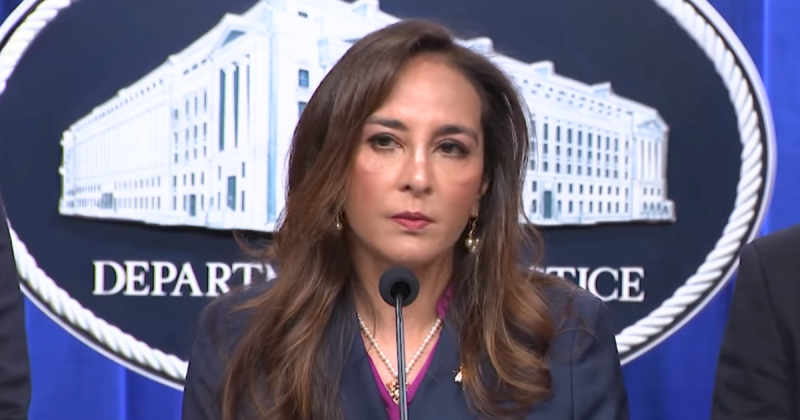
Assistant Attorney General Harmeet Dhillon, who leads the Civil Rights Division, said Lemon admitted he “knew exactly what was going to happen inside that facility” prior to the protest and emphasized that his claim of acting as a journalist will not protect him from prosecution.
Dhillon confirmed that the DOJ will be pursuing charges under the Klan Act, including investigating whether participants crossed state lines or used mail and wire services to coordinate the demonstration
“The Klan Act remains one of the most significant civil rights laws on the books,” she said, noting that investigators are reviewing whether participants crossed state lines, used mail or wire services, or received external funding to coordinate the demonstration.
Resist the Mainstream reported earlier that the protest took place at Cities Church, where activist Nekima Armstrong led a group of anti-ICE demonstrators targeting the pastor because of his alleged connections to federal immigration authorities.
Video footage shows Lemon engaging directly with the protestors, handing out donuts and coffee and appearing to coordinate their actions.
In one clip, Lemon kisses Armstrong on the cheek while acknowledging that protestors were “gearing up for resistance and protest.”
Lemon livestreamed the event on YouTube, claiming the disruption was a legitimate exercise of First Amendment rights.
“This is what the First Amendment is about, the freedom to protest… I’m sure people here don’t like it, but protests are not comfortable,” he said.
Federal officials countered that statutes such as the Freedom of Access to Clinic Entrances (FACE) Act make it illegal to obstruct, intimidate or harass worshippers at places of religious assembly, raising the possibility that Lemon’s actions constitute a violation of federal law.
Legal experts note that participating in a protest while aware of its intent to disrupt a religious service could meet the threshold for civil rights violations, including conspiracy charges.
Conservative commentators argue the case highlights the dangers of media figures embedding themselves with activist groups in ways that cross legal lines and potentially endanger law-abiding citizens.
The Klan Act is historically rare in modern enforcement but has been applied in combination with other statutes, such as the FACE Act, to secure conspiracy charges in demonstrations targeting sensitive facilities, including clinics, The Western Journal noted.
Observers say the DOJ’s approach signals that federal authorities are willing to enforce civil rights protections vigorously when constitutional rights are at stake, even in situations involving prominent media personalities.
Authorities continue to investigate Lemon and the associated protestors, examining potential financial support and interstate coordination.
Dhillon warned, “Everyone in the protest community needs to know that the fullest force of the federal government is going to come down and prevent this from happening and put people away for a long, long time.”
The incident has reignited debate over media responsibility, activism, and the intersection of journalism with partisan protest.
Conservative analysts assert that Lemon’s involvement underscores a troubling trend of prominent media figures acting not as neutral observers but as active participants in demonstrations that violate the law.
With legal proceedings underway, the case may set a precedent for how far journalists can go when engaging with activist groups while claiming First Amendment protections.
WATCH:
