

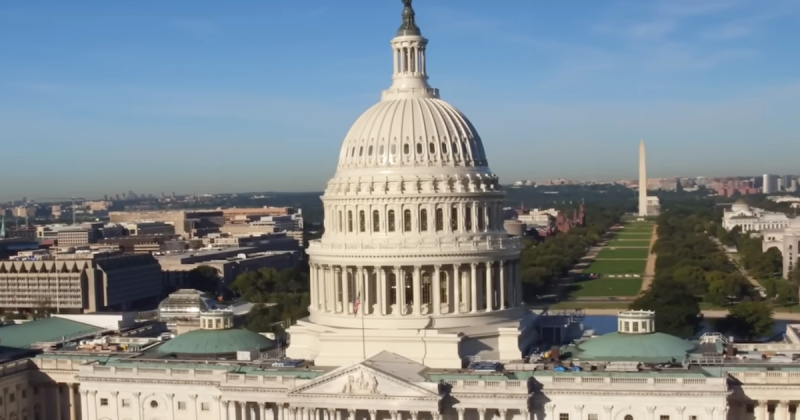
The Senate is considering a sweeping appropriations bill that could direct billions in federal funding toward refugee programs, prompting debate among conservatives over national spending priorities.
The FY 2026 Labor, Health and Human Services, and Education Appropriations Act (S. 2587), first introduced in July, is designed to fund refugee and entrant assistance as part of a broader package once temporary government funding expires on January 30, 2026.
The legislation allocates roughly $5.69 billion for refugee and entrant assistance activities, with most of the funds available through 2028 to implement programs authorized under the Immigration and Nationality Act and the Refugee Education Assistance Act of 1980.
Critics point out that such funding comes despite historically low refugee caps.
The Trump administration set the FY 2026 limit at 7,500 refugees, a dramatic reduction from the 125,000 cap under the previous administration, The Blaze reports.
Of the total funding, approximately $564 million is dedicated to “Transitional and Medical Services,” which provides cash support, medical care and foster services to newly arriving refugees, as well as unaccompanied children entering the country.
The bill also recommends over $300 million for “Refugee Support Services,” aimed at maintaining resettlement agencies’ ability to serve both new arrivals and previously resettled individuals.
The legislation includes conditional funding triggers tied to migrant arrivals.
If the number of unaccompanied children referred in any month of fiscal 2026 exceeds 16,000, an additional $15 million would automatically become available.
Lawmakers designed this mechanism to allow programs to quickly respond to unexpected surges in arrivals without waiting for supplemental appropriations.
Senate Republicans, who control the Appropriations Committee by a narrow 15‑to‑14 margin, are responsible for drafting the bill.
It funds not only refugee programs but also the Departments of Labor, Health and Human Services, Education and associated agencies.
Conservatives have criticized the refugee allocations, arguing that taxpayer dollars may be directed to programs that are redundant or unnecessary given historically low intake numbers.
Online commentators have framed the proposal as an example of federal overreach and questioned whether the funding aligns with the nation’s fiscal priorities.
Supporters maintain that sustained funding is essential for maintaining the nation’s refugee resettlement infrastructure.
Congressional documents note that assistance to states and nonprofit organizations ensures eligible refugees can access critical services—including medical care, education, and social support—facilitating their integration into American communities.
The debate over refugee funding comes amid wider discussions of immigration and fiscal policy.
Observers point out that the bill underscores the ongoing tension between conservative calls for limited government spending and the federal government’s obligations to support refugees and entrants under U.S. law.
As the temporary funding expires at the end of January, lawmakers will face pressure to approve a final appropriations package, with refugee allocations likely to remain a point of contention.
With billions at stake, S. 2587 demonstrates how refugee and humanitarian programs remain intertwined with broader federal budget considerations.
The proposed funding measures highlight the challenge of balancing fiscal responsibility, border security and the legal commitment to provide essential services to those entering the United States.
