

A little-known filing in North Carolina has ignited concern among conservatives, exposing potential vulnerabilities in GOP primaries ahead of the 2026 midterms.
Lakeshia M. Alston recently registered to run as a Republican for State Senate District 22, a seat encompassing parts of Durham County and widely regarded as solidly Democratic.
With no other Republican candidates on file, Alston could secure the GOP nomination unopposed, creating a scenario that would automatically advance her to the general election.
The situation has sparked a debate over the integrity of party primaries, especially in districts where low voter turnout can magnify the influence of a single candidate.
Conservative activists have noted that such openings can be exploited, raising questions about strategic party-switching and the risk of unrepresentative nominees, according to the Independent Sentinel.
Comparisons have been drawn to previous GOP primaries in North Carolina and other states, where similar tactics influenced results in ways that left traditional conservative voters frustrated and disenfranchised.
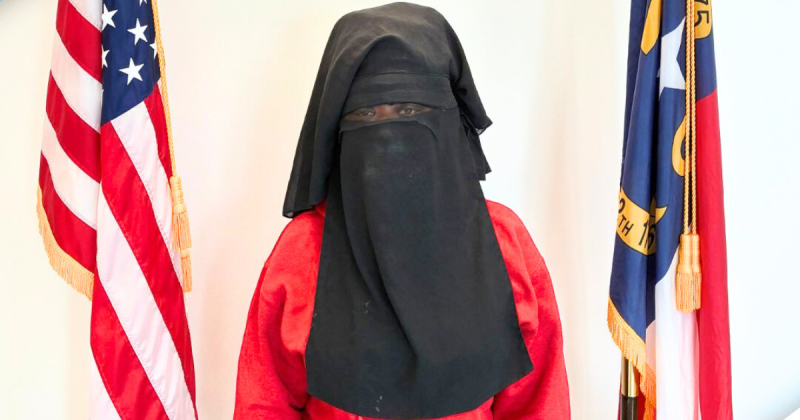
Scrutiny intensified after images of Alston’s filing documents circulated online.
Submitted to the Durham County Board of Elections, one photo shows her standing between the American and North Carolina flags while wearing a black niqab.
The image, along with another official photo of Alston without her niqab, was quickly shared on X, where it went viral, fueling questions about the authenticity and seriousness of her candidacy.
Public records reveal that Alston has a long history of voting in Democratic contests.
Data from the North Carolina State Board of Elections show repeated participation in Democratic primaries and general elections spanning more than a decade, casting doubt on whether her sudden Republican registration reflects genuine ideological change or a calculated tactic, according to The Gateway Pundit.
The filing also raises legal and procedural questions.
North Carolina law requires candidates to be registered with their chosen party at least 90 days before filing.
Alston submitted her candidacy on Dec. 17, implying any party switch would have occurred after the most recent election cycle in which she voted as a Democrat.
While her filing may technically comply with the rules, critics argue that it contradicts the spirit of party affiliation requirements.
Alston’s campaign operation, or lack thereof, has added to the controversy.
She has no public platform, no website and minimal social media activity linked to her candidacy, Patriot Fetch notes.
Observers suggest that her filing may be aimed at exploiting procedural gaps rather than engaging in serious electoral competition.
The North Carolina Republican Party has yet to respond publicly, but pressure is building for officials to recruit a legitimate conservative candidate or clarify how such filings will be handled in the future.
Party leaders face a critical choice: allow an unopposed candidate with a Democratic history to move forward, or intervene to protect the integrity of the nomination process.
Alston’s entry into the race underscores broader concerns about the GOP’s readiness to defend its primaries from unconventional strategies.
Her candidacy serves as a litmus test for how party officials, activists, and voters respond to challenges that blend procedural loopholes with potential strategic manipulation.
For conservative voters, the unfolding situation highlights the importance of vigilance, engagement, and ensuring that nominees reflect the party’s principles rather than merely taking advantage of technical openings.
