

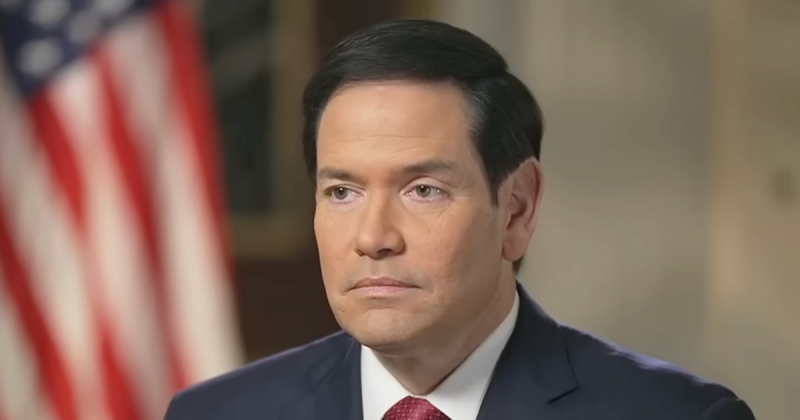
A major shakeup erupted in Washington after Secretary of State Marco Rubio vanished from a critical NATO summit as world leaders met to discuss Russia’s war against Ukraine.
Rubio’s seat sat empty in Brussels, marking the first time since 1999 that a U.S. Secretary of State skipped a major NATO government meeting.
While European officials expected Rubio to join negotiations over Putin’s next moves, he was nowhere near the building.
Instead, he has buried himself in another fight closer to home: Venezuela.
Rubio recently told Sean Hannity that the real “America First” policy starts in the Western Hemisphere, not “fighting wars abroad.”
“If you are focused on America and ‘America First,’ you start with your own hemisphere,” Rubio said, suggesting that foreign policy should prioritize threats coming from Latin America.
Those remarks were viewed inside Washington as a thinly veiled swipe at Trump’s push to negotiate peace with Vladimir Putin, led by trusted envoys like Steve Witkoff and Jared Kushner.
The diplomatic snub has sparked a wave of questions about Rubio’s true political goals and whether his Venezuela campaign is really a power move.
One State Department official told the Daily Mail that Rubio’s focus on Venezuela is “hardly just about policy” and tied directly to money and influence, according to the Daily Mail.
“Rubio’s top priority is his Latin American agenda. He needs to satisfy wealthy Venezuelans in Florida who are useful for his political future,” the diplomat said.
Officials also revealed Rubio’s distrust of Putin and discomfort with Trump’s diplomatic envoys. They claim Rubio believes Putin is manipulating negotiations.
“He doesn’t necessarily respect how Trump’s envoy is handling talks,” another insider said, while adding that Rubio would “never say that publicly.”
Rubio has increasingly appeared inside the White House while skipping traditional foreign missions, a move insiders see as strategic positioning.
The tension comes as Congress questions the legality of Trump’s recent naval strikes against Venezuelan drug boats. Lawmakers may attempt to shield the administration by adding protections in the National Defense Authorization Act.
Rubio, a hardliner from Miami’s Cuban exile community, has long pushed for a maximum pressure strategy against Venezuela. He labeled its rulers the “narco-terror government” and warned of their drug networks.
The growing conflict intensified after Maduro’s regime was labeled a foreign terrorist organization, expanding U.S. military options in the region.
Trump spoke with Maduro last week and demanded he step down. Officials are reportedly weighing whether to exile Venezuela’s dictator to a wealthy nation like Qatar.
The State Department defended Rubio’s NATO absence, saying it is “impractical” to expect him at every meeting. They dismissed claims of infighting as “anonymous gossipers slinging baseless smears.”
As war escalates abroad and U.S. forces strike cartel boats in the Caribbean, Rubio’s quiet power play has opened a new struggle inside Trump’s foreign policy team.
