

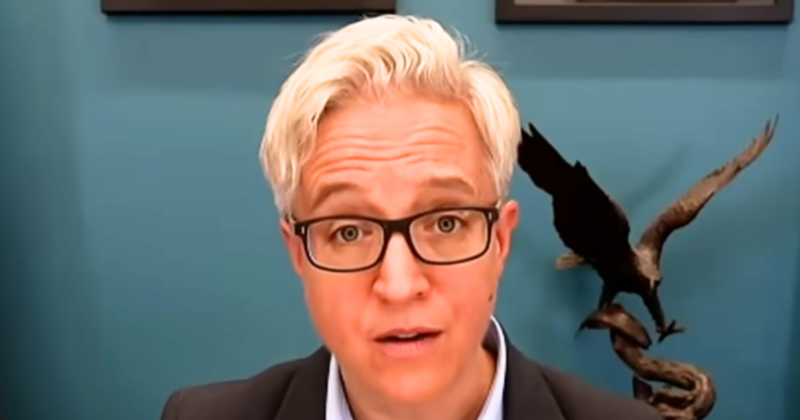
Oregon Governor Tina Kotek and Attorney General Dan Rayfield have announced plans to arrest federal agents conducting immigration enforcement operations in the state, setting up a potential constitutional showdown with the federal government.
In a video statement posted to Instagram, Kotek accused the Department of Homeland Security (DHS) of carrying out what she described as unlawful actions during immigration enforcement operations.
The governor claimed federal agents were targeting Oregon residents and creating fear in immigrant communities across the state.
Kotek stated her belief in the rule of law while also emphasizing Oregon’s identity as a welcoming place for immigrant and refugee populations.
She characterized recent DHS actions as unacceptable and suggested the state would pursue criminal charges against federal officers.
The governor declared that no government agency operates above the law.
She expressed full support for the attorney general and local district attorneys who have issued warnings to federal authorities about their enforcement activities in Oregon.
Kotek emphasized that Oregon officials are closely monitoring all ICE operations within state borders.
She warned that investigations into alleged misconduct would be conducted and that federal officers who violate state law would face accountability like any other individual.
The governor stated she would not permit what she characterized as reckless or unconstitutional behavior within Oregon’s boundaries.
She noted that while ICE activity has increased in recent weeks, Oregonians have responded by supporting their neighbors and taking action when they observe concerning situations.
Her comments followed a joint letter issued on November 25, 2025, by Attorney General Rayfield along with district attorneys from Multnomah, Washington, and Clackamas Counties.
Nathan Vasquez, Kevin Barton, and John Wentworth joined Rayfield in sending formal notice to U.S. Attorney General Pam Bondi and DHS Secretary Kristi Noem.
The letter informed federal officials that state authorities would monitor federal activities and potentially pursue state-level prosecutions.
The Oregon officials cited concerns about alleged excessive force during arrests and protest policing tactics.
Rayfield claimed multiple Oregon residents had filed complaints regarding the use of excessive force by federal agents, according to the letter.
The correspondence demanded an immediate end to what state officials characterized as unlawful actions.
State officials called for improved training protocols, better coordination with local law enforcement agencies, thorough investigation of complaints and complete cooperation with state-level investigations.
The letter stated that Oregon’s Department of Justice and the three district attorneys’ offices would actively monitor federal conduct and investigate cases where officers appeared to exceed their authority.
DHS Assistant Secretary Tricia McLaughlin issued a sharp response to Oregon’s Democrat leadership.
She accused state officials of inciting and enabling violence against federal agents conducting lawful duties.
McLaughlin pointed to a dramatic 1,150 percent increase in assaults targeting ICE officers.
She noted that numerous attacks involved the use of Molotov cocktails and firearms against federal personnel.
The Department of Justice characterized Oregon’s threats to arrest federal agents as both illegal and futile.
Federal officials cited the Supremacy Clause of the U.S. Constitution, which establishes that federal law supersedes state law when the two conflict.
The U.S. Attorney’s Office for Oregon has charged more than 40 individuals with federal crimes near the ICE facility since June 2025.
The charges include multiple arrests for serious offenses such as arson and assault against federal officers and property.
If Oregon officials follow through with arrests or prosecutions of federal agents performing their lawful duties, legal experts predict intense court battles.
Such actions would likely trigger a constitutional crisis over the balance of federal and state authority, potentially reaching the Supreme Court for final resolution.
WATCH:
