

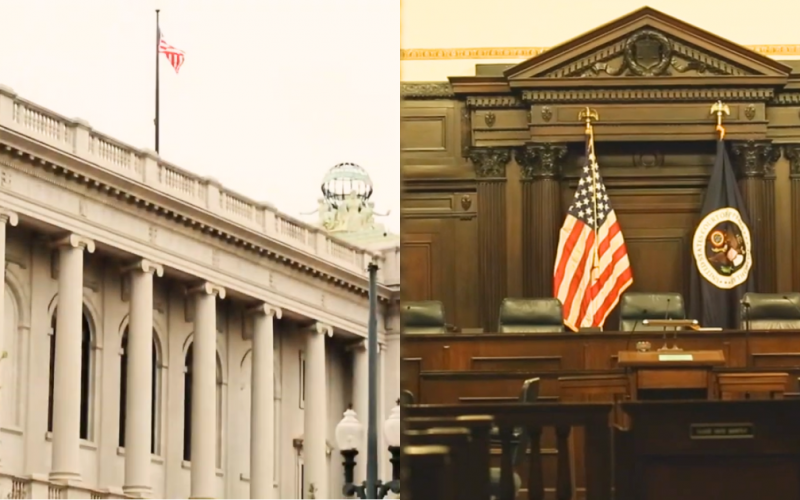
A nearly 160-year-old federal restriction on home distilling has been struck down by a federal appeals court, marking a significant shift in how courts interpret the limits of Congress’s authority over personal alcohol production and reigniting debate over federal regulatory power.
The decision centers on a Reconstruction-era law that had long prohibited individuals from producing distilled spirits such as whiskey or vodka in their homes without federal authorization.
The statute, originally enacted in the 19th century, carried severe penalties, including fines of up to $10,000 and prison terms of up to five years, and was designed in part to prevent tax evasion in alcohol production.
The legal challenge was brought by the Hobby Distillers Association along with several individual members who argued that the law no longer fit modern conditions.
They claimed the ban criminalized non-commercial hobby activity and personal experimentation, even when no revenue loss or commercial intent was involved.
In its ruling, the 5th U.S. Circuit Court of Appeals concluded that the federal government had stretched its constitutional authority too far in defending the prohibition, The Guardian reported.
The court found that the statute could not be justified under Congress’s taxation power because it did not effectively support revenue collection and instead prevented taxable goods from being produced in the first place.
Writing for the panel, Circuit Judge Edith Hollan Jones said the law operated in a way that undermined its stated purpose.
She noted that rather than regulating alcohol production for taxation, the statute effectively blocked it altogether, making it inconsistent with the government’s claimed authority under federal tax powers.
The court ultimately determined that such an approach exceeded constitutional limits.
The ruling also raised broader constitutional concerns about how far federal authority could extend into private life.
The court warned that accepting the government’s interpretation of its tax power could justify criminalizing a wide range of ordinary household activities if they were loosely connected to potential revenue concerns.
Judge Jones suggested that this logic, if accepted, could blur the boundary between federal regulatory authority and personal liberty.
The case itself involved hobby distillers who described their activities as small-scale, non-commercial experimentation.
One plaintiff cited personal projects involving flavored spirits and even fuel distillation, arguing that the law treated recreational activity as criminal conduct despite its lack of commercial impact, according to Fox 5 DC.
The ruling upheld an earlier 2024 decision from a lower federal court that had already found the law unconstitutional but paused enforcement while the appeal process played out.
With the appellate court’s ruling now finalized, that earlier injunction is expected to take effect, effectively ending enforcement of the prohibition within the jurisdiction of the 5th Circuit.
Legal advocates for the plaintiffs described the outcome as a major affirmation of individual freedom and a narrowing of federal authority.
They argued that the decision reinforces a distinction between legitimate tax enforcement and the regulation of purely personal, non-commercial conduct.
Federal agencies that defended the law, including the Justice Department and alcohol regulatory authorities, did not immediately issue public responses following the ruling.
Their silence leaves open the possibility that further legal steps or clarifications could be pursued, though the current decision represents a major setback for the government’s position.
The ruling adds to a growing pattern of federal courts revisiting long-standing statutes and evaluating whether historical laws remain compatible with modern constitutional interpretation.
In this case, the court’s decision places renewed attention on how Reconstruction-era regulations continue to shape contemporary debates over taxation authority, personal freedom, and the reach of federal enforcement power.
