

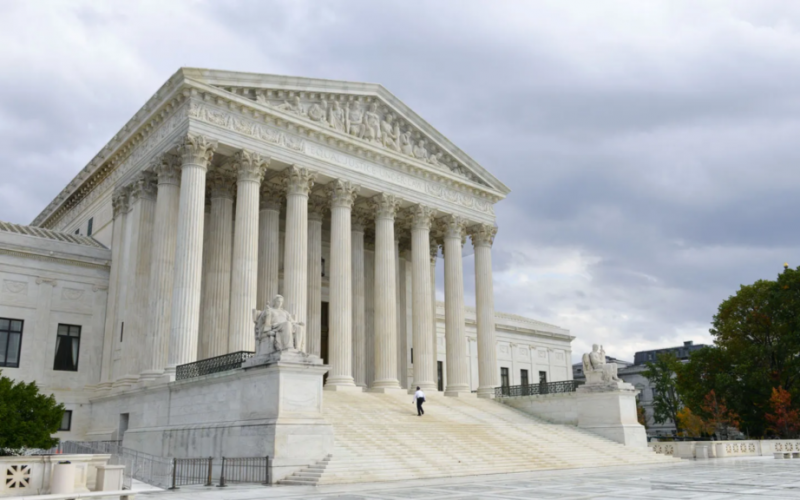
The U.S. Supreme Court on Friday struck down President Trump’s sweeping global tariff program in a 6–3 decision, ruling that his use of emergency economic powers to impose broad import duties exceeded the authority granted by Congress.
The decision marks a major constitutional limit on presidential trade power and could have significant implications for U.S. businesses, international trade policy, and future administrations.
At the center of the case was whether the president could rely on the International Emergency Economic Powers Act (IEEPA) to impose widespread tariffs without direct congressional approval.
The Court concluded that while the executive branch has certain emergency authorities, the Constitution gives Congress primary authority over taxation and trade regulation.
What the Supreme Court Tariff Ruling Means
In its majority opinion, the Court ruled that the tariff program went beyond what federal law allows under emergency powers statutes.
While presidents can respond to national emergencies involving foreign threats, the justices determined that the tariff framework used in this case effectively created a broad trade policy without explicit congressional authorization.
The ruling reinforces the constitutional principle that Congress — not the president — holds the power to impose taxes and regulate commerce with foreign nations. By striking down the tariff structure, the Court limited the scope of unilateral executive trade actions.
The 6–3 split reflects ongoing debate within the Court over the balance of power between the legislative and executive branches.
Background: How the Tariffs Were Implemented
The tariffs were originally imposed as part of a broader trade strategy aimed at reshaping U.S. economic relationships with foreign countries. The administration cited national economic security concerns and invoked emergency authority under IEEPA.
IEEPA allows the president to regulate commerce in response to unusual and extraordinary foreign threats. However, critics argued that the statute was never intended to authorize sweeping tariff programs that function similarly to taxes.
Multiple lawsuits were filed by businesses and trade groups who claimed the tariffs imposed significant financial burdens and exceeded statutory limits. Lower courts were divided, ultimately leading the case to the Supreme Court.
Why the Court Found the Tariffs Unlawful
The majority opinion focused on two key principles:
- Separation of Powers – The Constitution assigns tariff and tax authority to Congress. Expanding executive authority without clear statutory language would undermine that framework.
- Statutory Limits – The justices determined that IEEPA does not clearly authorize across-the-board tariff programs designed to reshape trade policy.
The Court emphasized that emergency powers must be interpreted narrowly and cannot be used to bypass Congress when implementing long-term economic policy.
What Happens to the Tariffs Now?
With the ruling in place, the invalidated tariff structure cannot continue in its current form. This raises several immediate questions:
- Will affected businesses receive refunds?
- Can Congress pass new legislation reinstating similar tariffs?
- Could a future administration attempt a revised approach under different statutes?
Legal experts suggest that refund litigation could follow if companies argue they paid unlawful duties. However, the process could take months or even years to resolve.
Congress also retains the authority to enact new trade measures through formal legislation if lawmakers choose to pursue that route.
Economic and Business Impact
The decision may have immediate effects on markets and supply chains. Businesses that faced higher import costs under the tariff framework could see reduced expenses moving forward.
Industries heavily impacted by trade policy — including manufacturing, agriculture, and retail — are likely to monitor how federal agencies implement the ruling.
Internationally, trading partners may view the decision as a signal that U.S. trade policy is more constrained by domestic constitutional limits than previously believed.
Political and Legal Reactions
Supporters of the ruling argue that it restores constitutional balance and prevents executive overreach. Critics contend that it restricts the president’s ability to respond quickly to economic threats.
The decision also adds to a broader legal conversation about how far emergency powers extend in areas traditionally regulated by Congress.
Legal scholars note that the ruling could influence future disputes involving executive authority beyond trade policy, particularly in areas where presidents invoke emergency statutes.
What This Means for Presidential Trade Power
The Supreme Court tariff ruling does not eliminate presidential influence over trade. Presidents still retain authority under various statutes, including Section 232 of the Trade Expansion Act and Section 301 of the Trade Act.
However, the ruling clarifies that emergency powers cannot serve as a substitute for congressional approval when implementing large-scale economic policies that function as taxation.
Future administrations may need to work more closely with Congress when designing comprehensive trade programs.
Frequently Asked Questions
Did the Supreme Court overturn all of Trump’s tariffs?
No. The ruling addresses the specific tariff framework challenged under emergency powers law. Other trade measures implemented under different statutes may not be affected.
Will companies receive refunds?
It is possible, but refund claims would likely require additional legal proceedings.
Can Congress reimpose similar tariffs?
Yes. Congress has constitutional authority over tariffs and could pass new legislation if lawmakers choose.
The Broader Significance
The Supreme Court’s decision represents a significant moment in the ongoing debate over executive power. By reinforcing Congress’s constitutional authority over tariffs and taxation, the Court set a precedent that could shape trade policy and presidential authority for years to come.
As federal agencies interpret and implement the ruling, businesses, lawmakers, and international partners will closely watch what comes next.
